Top of the Series Arc: 🔒 Leader’s Dispatch: Weight Comes After Insight
Previous: 🔒 Leader’s Dispatch: The 🤫 Silence After the Decision 🧭
❄ Leader’s Dispatch 6 of 6
Three exhibits that reveal the real root causes, Effort integrates into identity
Roadmap keeps breaking? Here are the three fixes that stop the top three failure loops.
A new initiative lands.
Slack goes feral. The roadmap “updates” again.
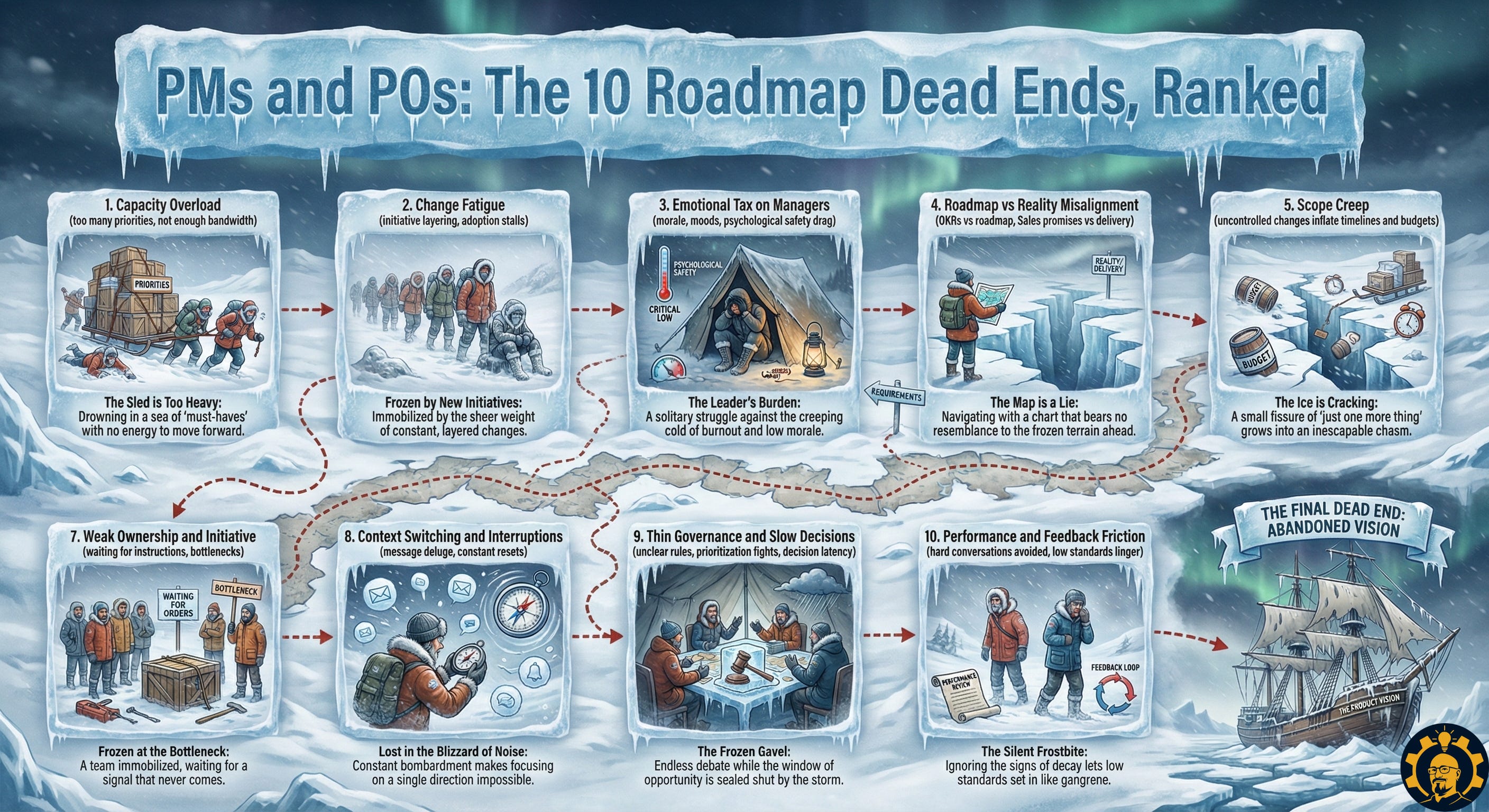
And you have already lived at least three of the dead ends you just saw (see above info graphic) this quarter. Roadmaps do not break from weak hustle. Roadmaps break from missing systems, and systems only stick when leaders repeat them until they feel boring. Effort becomes identity when the fixes stop being “initiatives” and become the default.
Your foot hovers over the snow because you know the cost of one more push.
Here’s the script that buys you breathing room without sounding like the villain:
“Before we commit, we need one thing: a stopping rule. What work pauses when this starts?”
The dead ends are real, but they are not random. They repeat because the system is built to repeat them. Top 10 looks like ten problems. It is closer to three systems failing in different costumes.
Perceptions are loud. Causes are quiet.
This Dispatch is for the moment when effort stops being a sprint and becomes the way work moves.
Takeaway
Those ten Roadmap Dead Ends look like ten separate problems. The reflex is to push harder. The better move is to fix the system that makes pushing rare. The iceberg below shows what teams blame above the waterline, and the structural conditions below that keep steering roadmaps into the same snowdrifts.

You just saw two zones.
Above the waterline: what PMs/POs blame because it’s visible, painful, and happening today.
Below the waterline: what keeps generating those same pains, even after the roadmap “updates,” the org “realigns,” and the tool stack “improves.”
Above the line is noise. Below the line is physics.
That is why the same problems feel cursed. They are not random. They are produced.
Why?
Winter does not end. Leaders change posture toward it.
Effort becomes identity when the team keeps doing the right practices on ordinary days, not heroic ones. The top pains stay the top pains because the constraints underneath keep winning quietly.
The iceberg is the moment you stop arguing with weather and start building a route.
This is the terrain I am mapping in my upcoming book, Collaborate Better (From Silos To Synergy, How To Build Unstoppable Teams). Systems that hold beat sprints that burn out.

How?
Name the dead ends without shame. Exhibit 1 is a mirror, not a rant.
Swap blame for structure. Exhibit 2 connects each complaint to what sits beneath it.
Install one practice at a time. Exhibit 3 turns the real fix into something repeatable, teachable, and survivable.
That last piece matters because “big change” often tells the same lie as a broken roadmap: We’ll just push harder. Thin ice loves that plan.
Bridge to Fixes: The Three Engines
If the iceberg showed you where the thin ice is, the engines show you how to stop falling through it.
Each engine solves one of the top three pains by repairing the system underneath it:
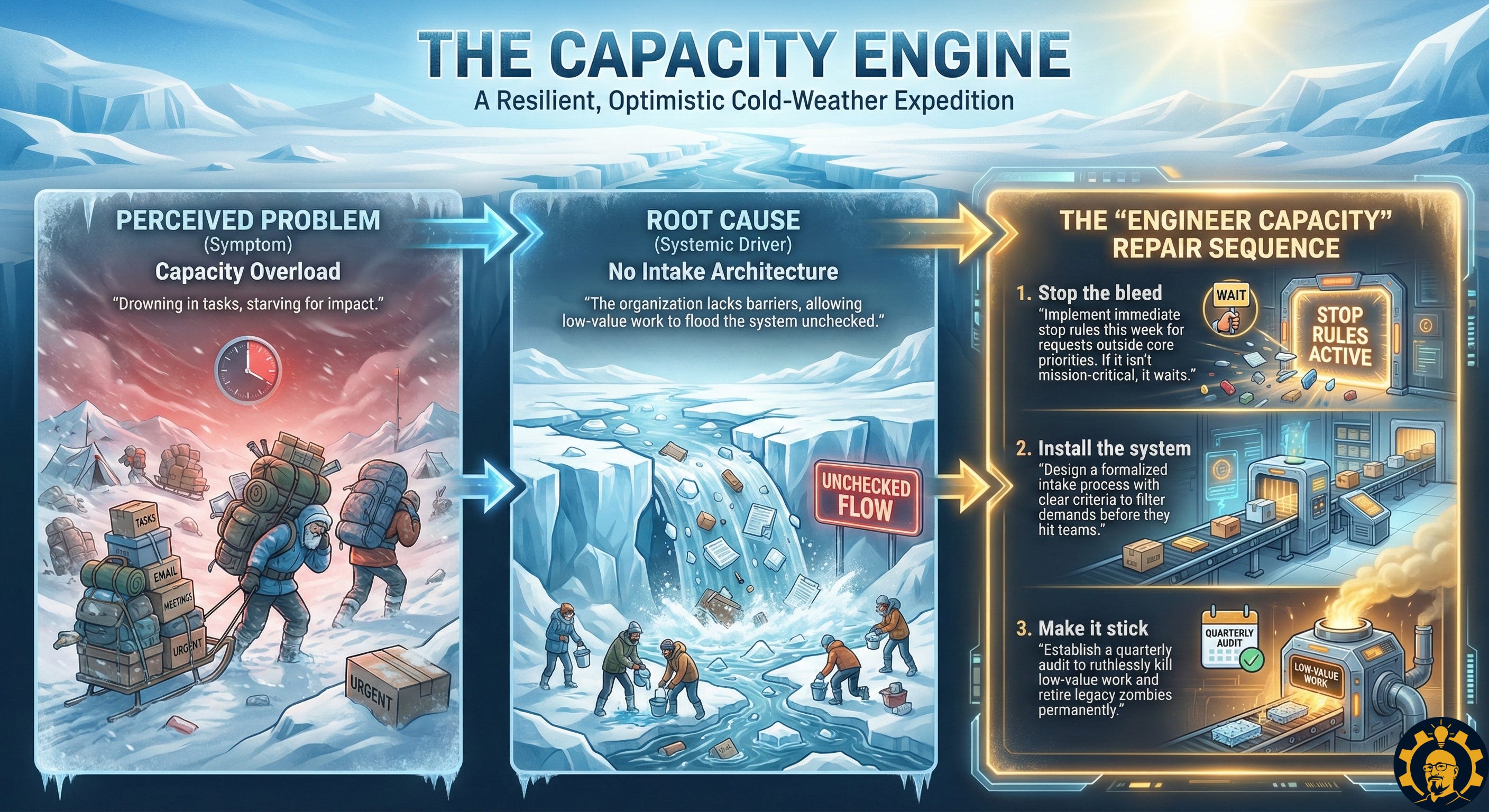
Capacity Overload → No capacity architecture
Change Fatigue → Decision latency + thin governance + low adoption capacity
Emotional Tax on Managers → Capability gaps, not tool gaps
We start where most teams bleed first: capacity.
Exhibit 3A: The Capacity Engine